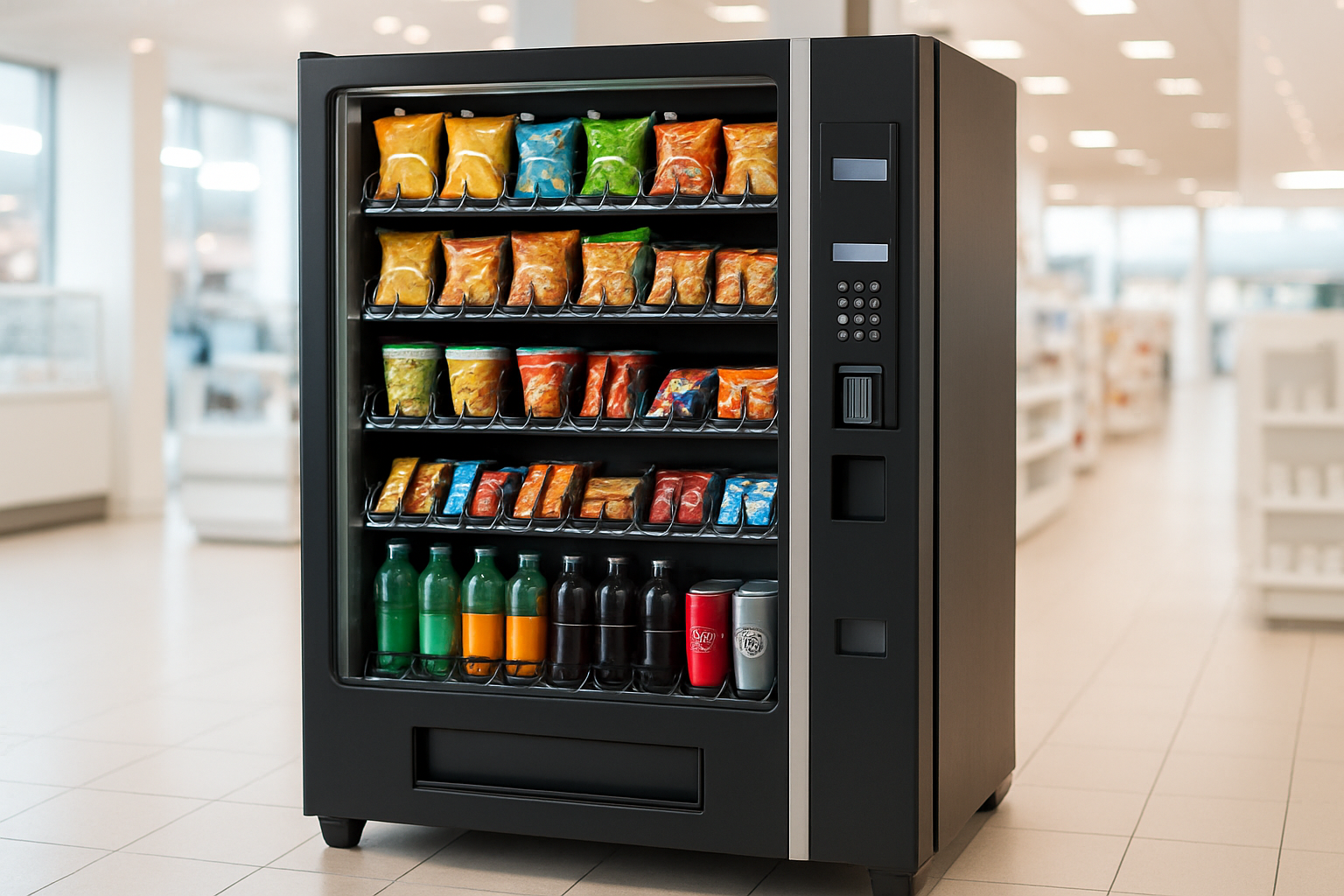
Vending has established itself as an essential channel in the food sector, offering convenience and accessibility to consumers. However, choosing the right vending machine for your business is not a trivial task. This article will help you understand the key aspects to select the equipment that suits your needs and those of your customers.\n\n
1. Define the Type of Products You Will Offer\n
The first step in choosing a vending machine is to be clear about the types of food and drinks you want to distribute. There are specific machines for snacks, cold or hot beverages, fresh products, or even healthy options. This choice determines the model and features you need.\n\n
2. Evaluate Capacity and Size According to Available Space\n
The space where the machine will be located determines its size and capacity. If you have a small shop or office, a compact machine with lower capacity may be sufficient. On the other hand, for large spaces or high traffic areas, it is better to opt for bigger machines with a wider variety.\n\n
3. Consider Technological Features and Payment Systems\n
User experience is key in today’s vending. Machines that offer versatile payment systems — such as cards, mobile apps, or contactless — make purchasing easier and increase customer loyalty. Additionally, some have technologies to monitor stock in real time or interact with customers.\n\n
4. Check Ease of Maintenance and Restocking\n
Technical support and ease of restocking products are factors that directly impact operations. It is important to choose a machine whose maintenance is simple and has quick technical assistance. This reduces downtime and improves customer service.\n\n
5. Analyze Total Cost and Profitability\n
Beyond the initial price, calculate the total cost of ownership, including energy, maintenance, and restocking. Also evaluate profitability based on expected user flow and product margins. A well-planned investment ensures medium- and long-term success.\n\n
Common Mistakes to Avoid\n\n- Choosing machines without considering the end consumer profile.\n
- Failing to anticipate the necessary space for installation and maintenance.\n
- Ignoring the importance of modern and secure payment methods.\n
- Not evaluating after-sales service and technical support.\n
- Underestimating operational and restocking costs.\n\n\n
Conclusion\n
Choosing the right vending machine involves a thorough analysis of products, space, technology, maintenance, and costs. Having a specialized supplier who understands these needs makes the process easier. For example, companies like Bages Vending offer solutions tailored to the food sector to maximize efficiency and customer satisfaction.
Conclusion\n
Choosing the right vending machine involves a thorough analysis of products, space, technology, maintenance, and costs. Having a specialized supplier who understands these needs makes the process easier. For example, companies like Bages Vending offer solutions tailored to the food sector to maximize efficiency and customer satisfaction.